Leeds has no racecourse of its own, but it is ringed by them, and in October two of the closest change places. Twenty-odd miles to the south-east, Pontefract runs its last two flat meetings of the year on a pair of Mondays. Twelve miles to the north-east, Wetherby opens its jumps season and then stages one of the first important steeplechases of the winter. If you live in Leeds and fancy a race day this month, you are spoilt for choice in both directions.
October fixtures
- Monday 5 October: Pontefract, the penultimate meeting of its season
- Wednesday 14 October: Wetherby, the opening meeting of its jumps season
- Monday 19 October: Pontefract, the season finale
- Friday 30 October: Wetherby, the Charlie Hall meeting, day one
- Saturday 31 October: Wetherby, the Charlie Hall meeting, day two
Pontefract: castle, liquorice and a very long track
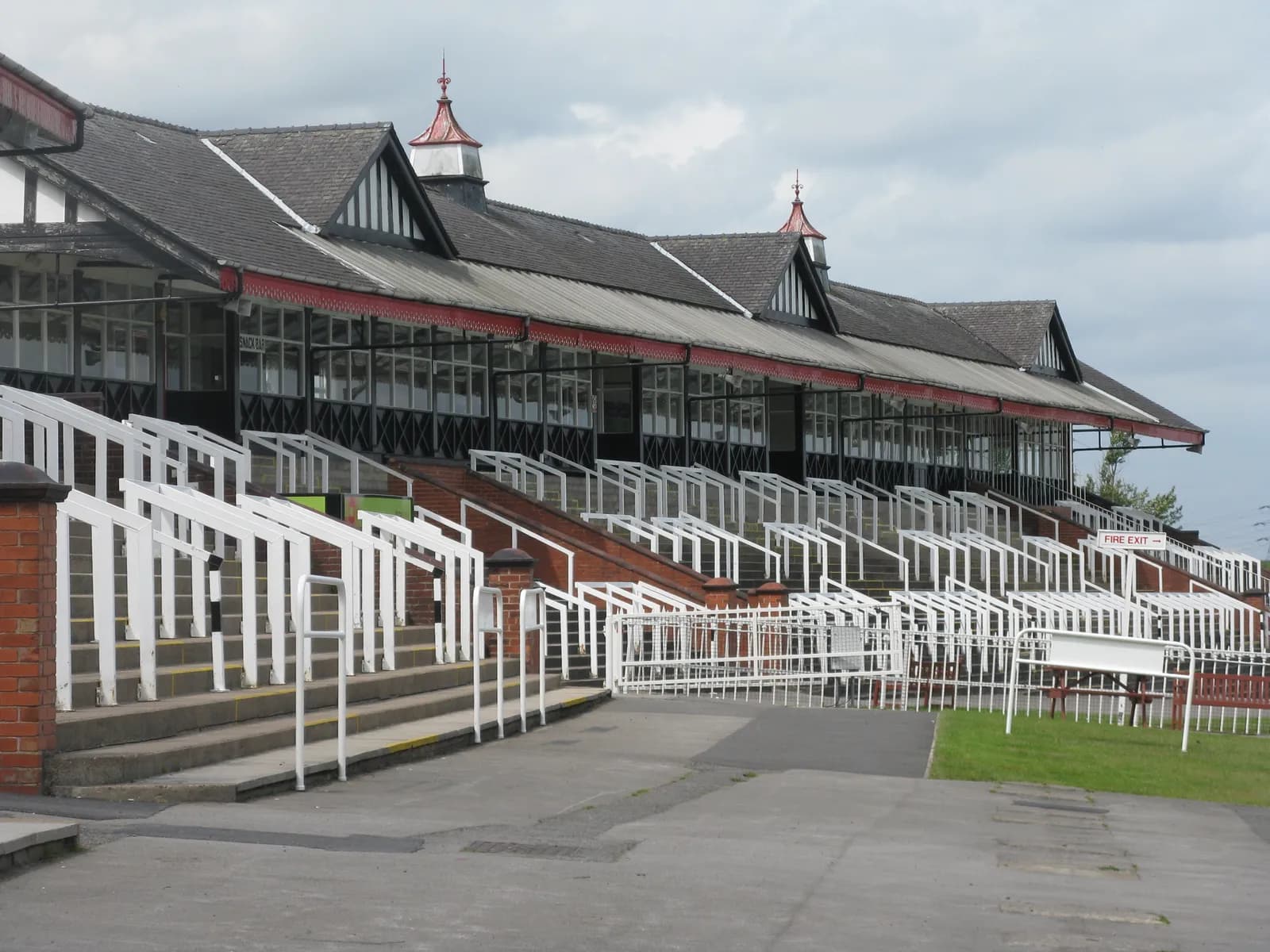
Racing in Pontefract is recorded as early as 1648, in meadows near the town, at a time when the castle above it was in the middle of the Civil War. That castle is the key to understanding the town. Built by Ilbert de Lacy around 1070, it grew into one of the great fortresses of the north. Richard II was imprisoned there after he was deposed and died there, probably in February 1400. Royalist forces held it through three Parliamentary sieges between 1644 and 1649, and after the execution of Charles I, Parliament ordered it to be demolished and levelled. The ruins still stand on their hill above the town.
The early racing faded out by 1769. The townspeople revived it in 1801, and it has continued ever since. Pontefract was also one of the few northern courses to keep racing during the Second World War, and it has a few firsts to its name: photo-finish equipment arrived in 1952, and it was the first English course to have a dope-testing facility.
Then there is the liquorice. The plant was grown in the deep soils around Pontefract for centuries, and in 1760 a local apothecary, George Dunhill, added sugar to the medicinal extract and turned it into a sweet. Pontefract cakes, the small black discs stamped with an image of the castle, became the town's calling card. When Pontefract held the first parliamentary election under the secret ballot in 1872, the ballot box was sealed with a stamp from a liquorice works.
The course
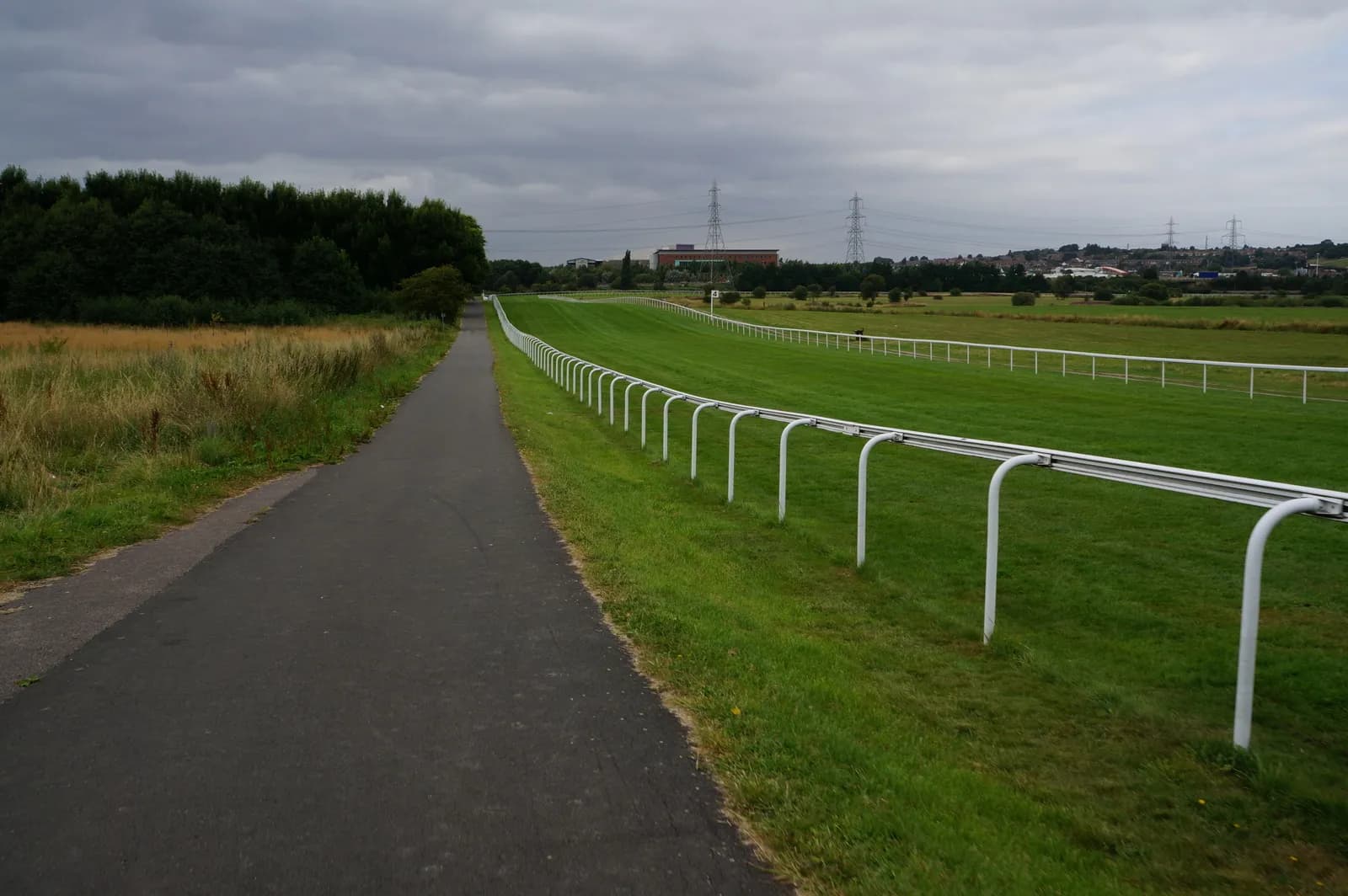
For years Pontefract was a horseshoe of a mile and a half. In 1983 it was joined up into a full circuit of a little over two miles, which made it the longest continuous flat circuit in Europe and allowed it to stage the Pontefract Marathon, one of the longest flat races in the calendar at more than two miles and five furlongs.
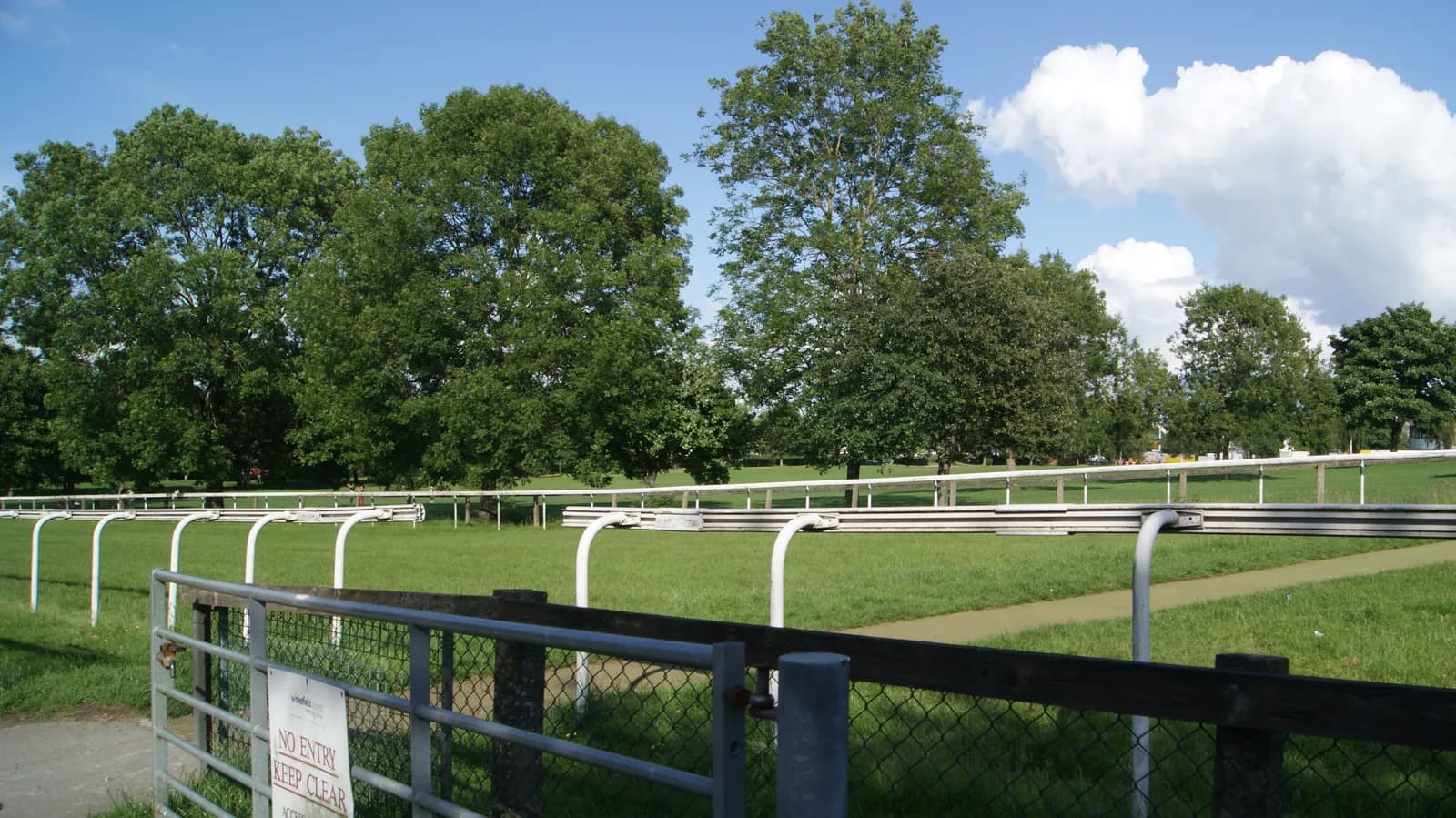
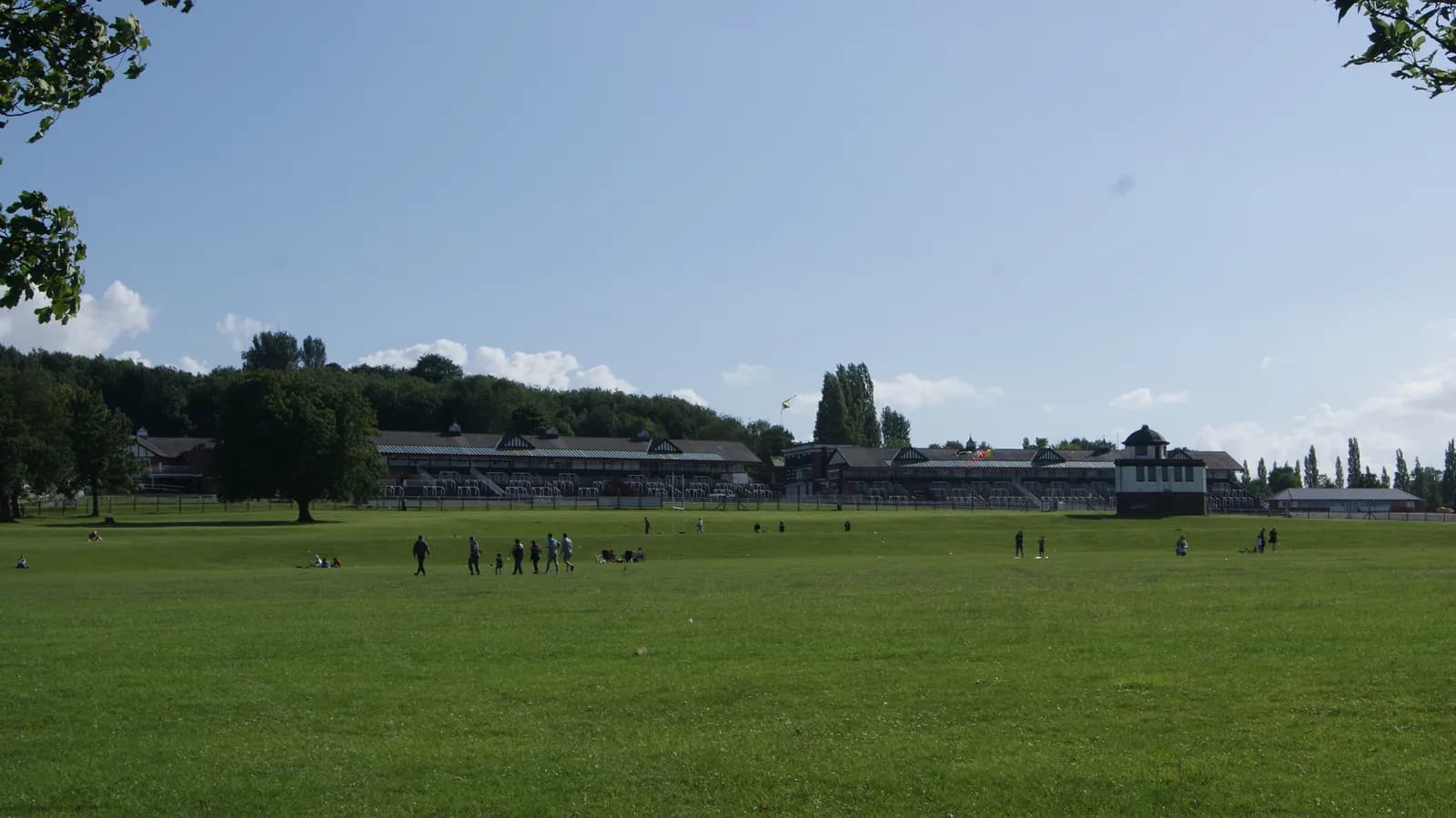
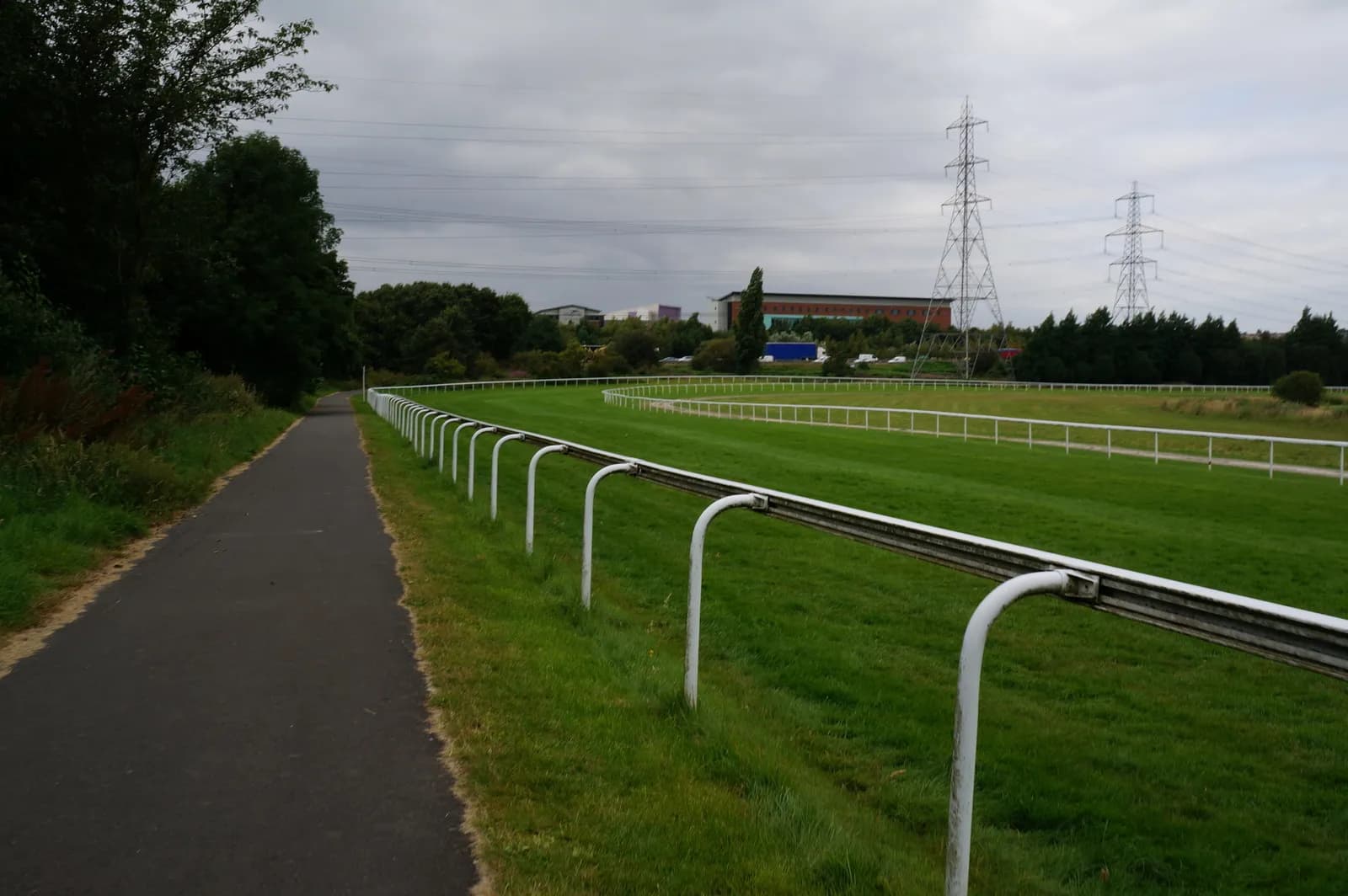
Length aside, it is a quirky track. It is left-handed and undulating, with a sharp bend into a short home straight and a stiff climb over the last three furlongs. Those two features pull in opposite directions: the bend helps a horse that can lie handy and kick early, while the hill finds out anything without stamina. Front-runners tend to do well over sprint trips, and horses that have won here before are always worth noting. Brown Panther, owned by the former England footballer Michael Owen, won the Pontefract Castle Stakes twice on his way to bigger prizes.
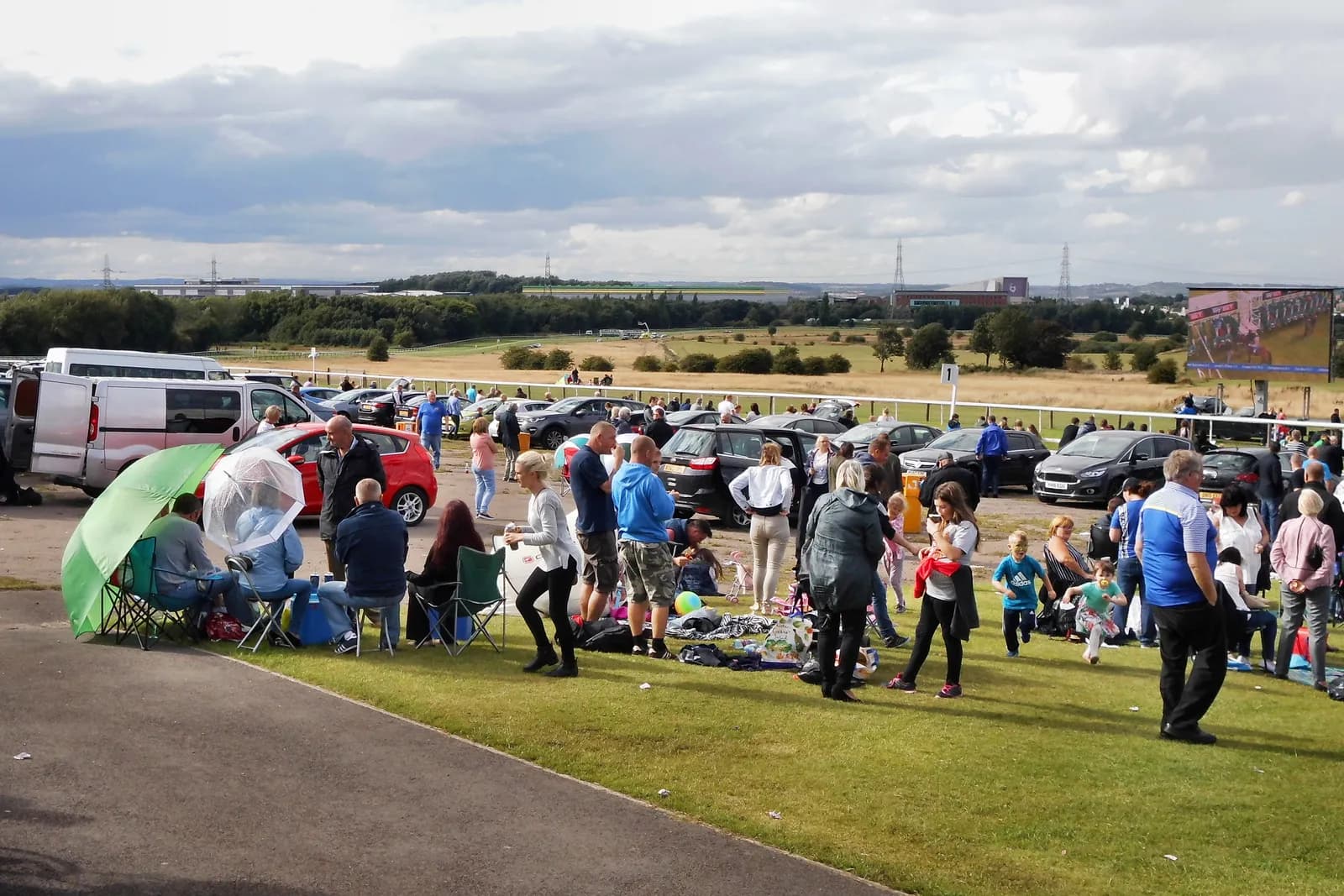
The October Mondays are workaday cards rather than big occasions, which is part of their charm: smaller crowds, easy access to the rail and the parade ring, and the feeling of a local course saying goodbye for the winter.
Wetherby: the jumps course on the A1
Wetherby's present course on York Road staged its first meeting at Easter 1891, after the town's racing had moved between several earlier sites. For more than a century it was purely a jumps track. Flat racing was added only in April 2015.
The course is a left-handed oval of about a mile and a half, with easy bends and a slight climb past the winning post. It rewards a long-striding horse that stays and jumps well. The York Road flyover, opened in 1966, links the course directly to the A1, which is still how most visitors arrive.
The Charlie Hall Chase, a Grade 2 over about three miles, has been run since 1969 and is the race the late-October meeting is built around. It is a traditional starting point for top staying chasers. One Man, See More Business and Cue Card all won it, and in 2022 Bravemansgame used it as a stepping stone to victory in the King George VI Chase. The opening fixture on Wednesday 14 October is lower key but a fine first taste of jump racing.
A first race day, explained
Arrive with time to spare: gates open well before the first race, and the first half hour is the best time to get your bearings. Races come along roughly every half hour. Between them, head to the parade ring, where the next race's runners are led round. You are looking for a horse that is calm, alert and well muscled, rather than one that is sweating up or messing about.
There are bookmakers in the betting ring, each setting their own odds, and the Tote, where the stakes go into a pool shared by the winners. An each-way bet is really two bets, one to win and one to place, so it costs double the stake you name. Set yourself a limit before you go and treat what you spend as the cost of the day.
Dress is generally relaxed in the main enclosures, with smarter expectations in premier areas. Check the course websites for the details. In October, layers and waterproofs matter more than anything else.
Getting there and making a day of it
Pontefract is easy from Leeds by rail. The town has three stations, Monkhill, Baghill and Tanshelf, and the racecourse is in Pontefract Park on the edge of town, close to junction 32 of the M62. Check the racecourse website for the most convenient station and the walking route. Leave time for the castle ruins and the old market town streets around the Buttercross and the market place. The town still celebrates its liquorice heritage, and Pontefract cakes are an obvious souvenir to take home.
Wetherby has no railway station, so it is a drive or a bus from Leeds, out along the A58 or via the A1(M). The town centre is compact and attractive, with a riverside walk along the Wharfe and the old bridge a short stroll from the market place. Families heading that way can combine a race day with the open spaces of the Wharfe valley, and nearby Bramham Park is a reminder of how much of this landscape was shaped by country estates.
Before you go
Check the Pontefract and Wetherby racecourse websites for race times, tickets, parking and the going. Fixtures this late in the year can be hit by waterlogging or frost, so look again on the morning of the meeting.