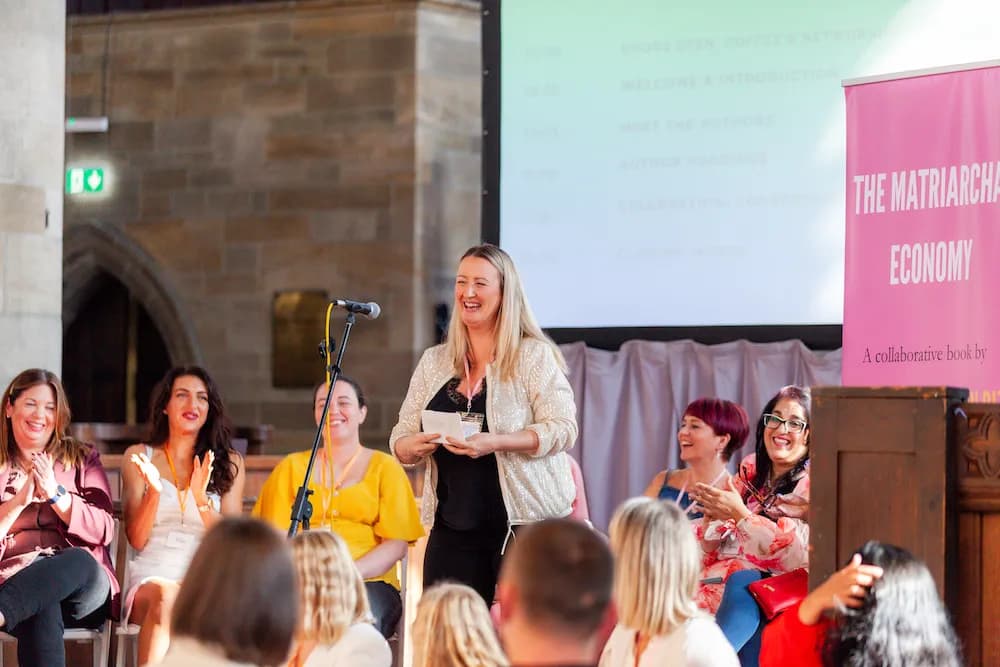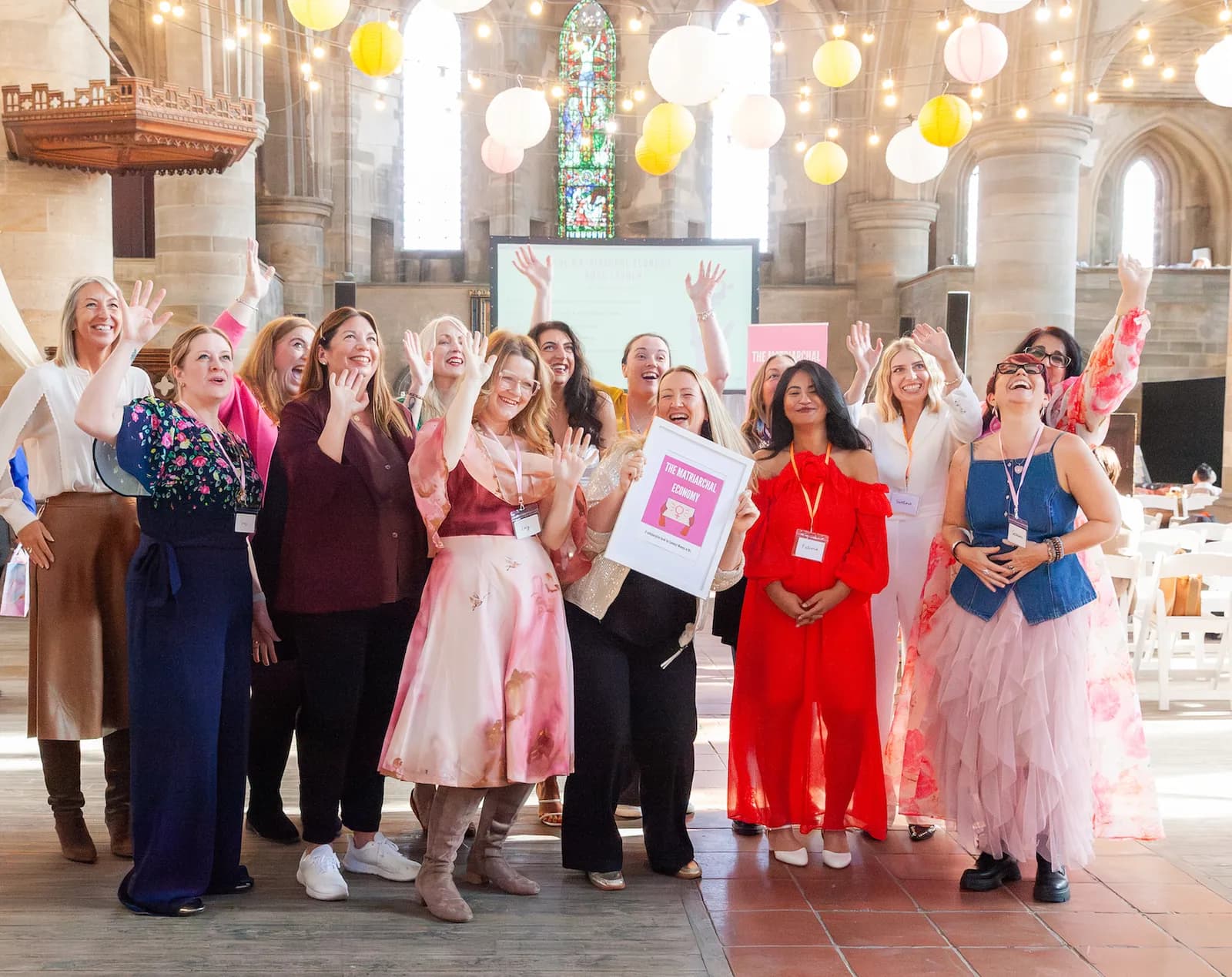
The book was officially launched on Friday, 9th October, at Left Bank Leeds, where many of the contributing authors gathered with Yorkshire-based business coach and Connect Women in Biz founder, Corinna Nicol, to celebrate its publication.
"The Matriarchal Economy" collaboration book, which is now available to buy, brings together stories from Yorkshire-based women building businesses rooted in collaboration, community, authenticity and long-term sustainability, while challenging the traditional expectation that success means working harder, doing more and sacrificing more.
The Launch Event
The event was a lively celebration of the women behind the book, with several contributors sharing readings from their chapters and reflecting on the experiences, ideas and lessons that shaped their stories. Guests had the opportunity to meet the authors, hear more about the inspiration behind "The Matriarchal Economy" and connect with others who share its vision for a more collaborative, sustainable and values-led approach to entrepreneurship.
Curator of the book, Corinna Nicol, said:
The Matriarchal Economy came from a question I’ve been asking myself for some time: what if we could build successful businesses that made more room for the people and values that matter to us?
We’ve inherited a very narrow idea of what business success looks like: grow quickly, work constantly, be visible everywhere and keep going whatever it costs. But, I don’t believe making room for family, health, relationships, community and a life outside work makes a business any less ambitious.
This book explores what happens when women question the familiar rules of business and build around the lives they actually want to live. And, this book celebrates women who have built successful businesses through collaboration, relationships, kindness and community. We hope it gives other women permission to build businesses that are commercially successful without compromising their wellbeing or their values.
Inside the Book
Contributors have shared real, raw and honest experiences of entrepreneurship, resilience, leadership and the realities of creating businesses alongside life, family, health, relationships and personal values. And, rather than offering one model of success to follow, "The Matriarchal Economy"shows the reader different ways women are redefining what a successful business can look like: from choosing sustainable growth and setting boundaries to charging properly, asking for help and building through collaboration rather than competition.
The book features a foreword by Lisa Bean, followed by contributions from Corinna Nicol, Jo Jessop Maloney, Caroline Towers, Allison Taylor, Nicola Lonsdale, Liz Howard, Tayba Azim, Geraldine Crane, Kitti Johnson, Kat Derbyshire, Fatima Riaz, Emily Harding, Kelly Krupianka, Ewelina Pydynowska, Lucy Hazlewood, Kim Scotland and Steph Nelson.
The book covers a wide range of experiences, from migration and motherhood to identity, leadership, resilience, worth, confidence and rebuilding a career, with contributors reflecting on the experiences that have shaped both their personal lives and businesses.
Contributors' Stories
For Fatima Riaz, a Huddersfield-based qualified accountant and tax agent who grew up in Saudi Arabia, becoming a published author represents something she once never thought possible. Reflecting on her chapter, she said:
I never once dreamt of having my own name in a book. It felt too far-fetched to even imagine, but here we are.
She hopes her story encourages younger women to be more ambitious about what they believe they can achieve.
Leeds-based Kelly Krupianka, founder of EMPWR, said that writing her chapter meant reflecting on some of the most difficult experiences of her life:
Writing this chapter was one of the most courageous and vulnerable things I’ve ever done.
She hopes other women will feel less alone in their own stories and inspired to live life on their own terms.
Jo Jessop Maloney, a PR and communications expert based in Wakefield, shares a chapter exploring her journey from spending years trying to prove she deserved a seat at the table to recognising her own value and learning to take up space with confidence. She said:
For years, I was very good at proving myself: working hard, taking on more and trying to earn my place, rather than believing I already deserved one.
For Jo, that lesson is also about making space for others. She added:
Knowing your own value isn’t about holding your seat tightly: it’s about knowing what you bring to the table and then asking who else needs a chair. There is room for all of us.
Wakefield-based holistic manual facial therapist and educator Ewelina Pydynowska reflects on her journey from leaving Poland and rebuilding her life and career in the UK to creating her own business. She described writing her chapter as:
An emotional and empowering experience.
She hopes her story inspires women to trust themselves and build success around their values and family life.
For artist Lucy Hazlewood, from Scissett, the writing process became a moment of personal reflection. She said:
Writing my chapter in The Matriarchal Economy felt like a release.
Her chapter explores what it means to stop hiding behind the life you have been handed and choose one for yourself.
Other contributors reflect on the quieter, often overlooked parts of building a business and a life. Rotherham-based website designer Kim Scotland, a millennial mother of two, said writing her chapter gave her the opportunity to reflect on her journey and the lessons she had learnt along the way. Caroline Towers, Bingley-based author, described the experience as an opportunity to reflect on how far she had come in both life and business, while connecting with other women "doing incredible things in the world".
The book also explores the idea that the businesses women build are often shaped by the communities and generations around them. Leeds-based Tayba Azim, founder of Nurturing Heart & Womb, said writing her chapter reminded her that "leadership often begins in the communities that raise us", and described her chapter as a tribute to the women who shaped her foundations and a call to build spaces rooted in belonging and connection.

The Wider Community
Corinna said the book reflects what she has seen through her community, Connect Women in Biz, which now brings together more than 2,500 online community members and a combined social media following of 10,000 women.
She said:
For me, a matriarchal economy is about recognising that money matters, but so do people, relationships, care, community and the long term. It’s about creating businesses that allow us to earn well, build security and have economic power, without believing that the price of success has to be our health or our integrity.
She added:
Together, the contributors offer very different perspectives on what it means to build a successful business, but a common thread runs through all their stories: success does not have to mean following a prescribed path. Women can build businesses in ways that reflect their values, their circumstances and the lives they want to lead.
More information about Connect Women in Biz can be found on the official website.